
Christopher Damman, Associate Professor of Gastroenterology, School of Medicine, University of Washington. Editor-in-Chief of Gut Bites MD.
What Counts as a Fermented Food?
Fermented foods are finally getting the scientific definition they deserve. The International Scientific Association for Probiotics and Prebiotics defines them as foods made through desired microbial growth and enzymatic conversions of food components.
That distinction matters because fermented foods are not automatically probiotics. Probiotics are live microorganisms that, when administered in adequate amounts, confer a health benefit on the host. Most fermented foods have not been studied at that strain-specific level or specifically evaluated for their benefit on the host.
More importantly, fermented foods are about more than live bacteria. Their value often lies in the compounds microbes create during fermentation, including organic acids like lactic and acetic acid, released minerals, B vitamins, modified polyphenols, and bioactive metabolites. This is why even pasteurized fermented foods can still support health.
Fermentation Is Ancient Human Biology
Food processing did not begin with factories.
Long before humans intentionally fermented foods, nature was already doing it for us. Overripe fruit naturally ferments, and genetic evidence suggests our ape ancestors evolved an enhanced alcohol dehydrogenase enzyme roughly 10 million years ago, long before brewing technology.

Why evolve an enzyme to break down alcohol before making alcohol?
The likely answer is naturally fermented foods.
This reminds us that fermentation is not a modern invention. It is an ancient biological relationship between microbes, food, and metabolism that our bodies likely adapted to over millions of years.
Not All Processed Foods Are Created Equal

Fermented foods and ultra-processed foods are both processed. The difference is what processing does to the food.
Ancient processing methods like fermentation generally work with biology. They use microbes and time to unlock nutrients, preserve food through natural acids, reduce antinutrients like phytates, and create greater flavor complexity.
Ultra-processing often does the opposite. It tends to strip away structure and biological complexity while delivering rapidly absorbed calories.
Fermentation often makes food more nourishing.
Ultra-processing often makes food easier to overconsume.
What Does the Science Say?

The idea that fermented foods support health is not just folklore.
A growing body of research links fermented food consumption to benefits ranging from improved digestive health and metabolic health to reduced inflammation and better cardiovascular health. In one landmark clinical trial, people who increased their fermented food intake developed greater gut microbiome diversity and lower levels of several inflammatory markers.
Interestingly, the increase in diversity did not appear to come from the microbes in fermented foods taking up permanent residence in the gut. Instead, fermented foods may have helped create conditions that allowed beneficial microbes already present in the gut to flourish.
Scientists are still working to understand exactly why. The answer likely involves a combination of live microbes, microbial metabolites, transformed nutrients, and bioactive compounds created during fermentation.
Like many traditional foods, fermented foods appear to support health not through a single ingredient, but through a network of biological interactions.
The Power in the Metabolites

The benefits of fermented foods are not just about live microbes. They are also about microbial metabolites.
Fermentation produces compounds like lactic acid, acetic acid, bioactive peptides, certain B vitamins, and transformed polyphenols that can influence digestion and metabolism even if the microbes are no longer alive.
It can also increase the availability of minerals such as iron. Together, these changes can support digestion and metabolism even if the microbes themselves are no longer alive.
A great example is vinegar. Its acetic acid can blunt blood sugar spikes by slowing gastric emptying and reducing how quickly glucose enters the bloodstream. In some ways, it can act metabolically like fiber by slowing nutrient delivery.
This helps explain why traditional food cultures often paired fermented acidic foods with starch-rich meals.
Coffee and Chocolate Count Too

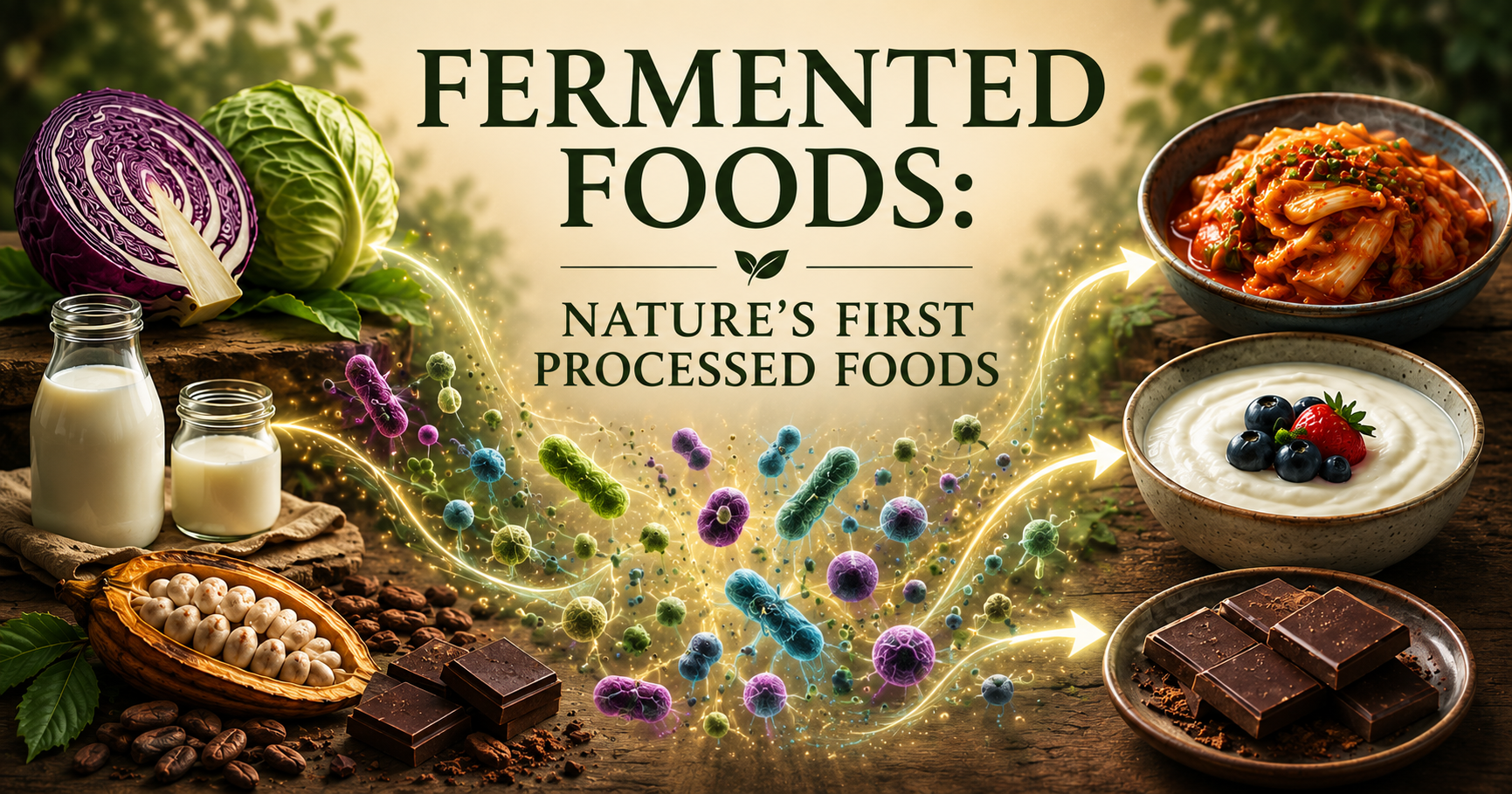
Fermented foods go far beyond yogurt and kimchi.
Coffee beans are fermented after harvest, helping create the flavor differences between regional varieties.
Cacao beans also undergo fermentation, which creates the flavor precursors that become chocolate’s richness and complexity.
Without fermentation, both would taste dramatically different.
Fermentation is not just preserving these foods. It is helping create them.
Not All Fermentation Is Equally Healthy

Most fermentation follows five classic fermentation pathways: lactic acid, acetic acid, propionic acid, butyric acid, and alcohol.
- Lactic acid fermentation produces foods such as yogurt, kefir, kimchi, sauerkraut, and many fermented vegetables.
- Acetic acid fermentation creates vinegar and foods made with vinegar, such as pickles.
- Propionic acid fermentation is best known for producing Swiss cheese, where the same microbes create both propionic acid and the characteristic holes.
- Butyric acid fermentation occurs in certain cheeses and fermented foods, although it is more commonly discussed as a fermentation process carried out by beneficial gut microbes in the colon.
- Alcoholic fermentation produces beer, wine, cider, and other alcoholic beverages.
The first four types of fermentations often create beneficial compounds that support metabolic health. Alcoholic fermentation is more complicated.
Yes, humans evolved alcohol dehydrogenase to break down alcohol. But this likely reflects adaptation to naturally occurring exposure, not evidence that alcohol is beneficial. The fact that we evolved a detoxifying enzyme is a reminder that not all fermentation products are equally health-promoting.
How to Add More Fermented Foods to Your Day
You do not need to overhaul your diet. Small additions can make a meaningful difference.
- Breakfast: Add yogurt or kefir to oats, berries, or smoothies
- Morning routine: Enjoy coffee as another naturally fermented, polyphenol-rich food
- Lunch: Add pickled onions, sauerkraut, or kimchi to sandwiches, salads, or grain bowls
- Dinner: Use kimchi, miso, or fermented vegetables to add acidity and complexity to meals
- With starch-heavy meals: Try vinegar-based dressings to help soften blood sugar spikes
- After dinner: Enjoy a square of dark chocolate, another fermented food rich in modified polyphenols
The bigger lesson is simple. Processing itself is not the problem.
The question is whether it works with biology or against it. Fermentation is one of nature’s oldest reminders that the best food technologies often deepen complexity rather than strip it away.
Christopher Damman, Associate Professor of Gastroenterology, School of Medicine, University of Washington. Editor-in-Chief of Gut Bites M

MD-authored gut health literature digests and first-in-class food quality app to power your microbiome.

Leave a Reply